
Bubbu & Mimmi World
BubaduCasual
3.8132.00 Reviews
- Version
- 1.59
- Installs
- 10.00M
- Age Rating
- Everyone
Screenshots
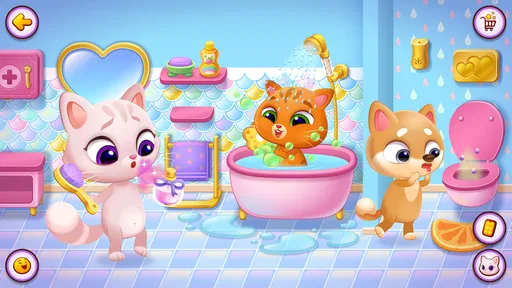

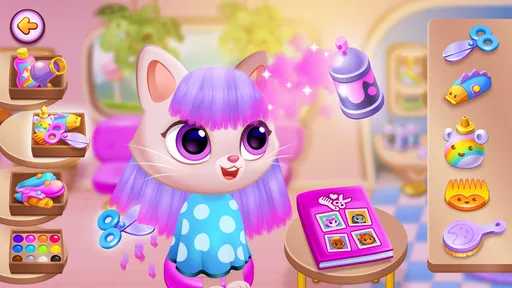
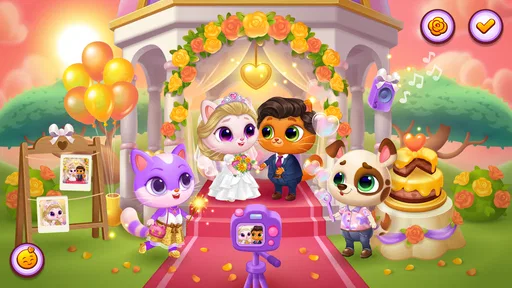
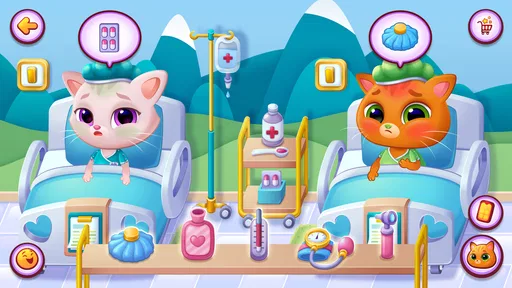
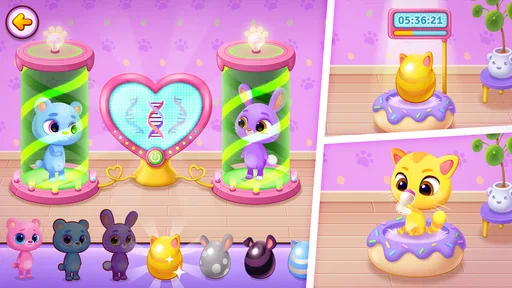
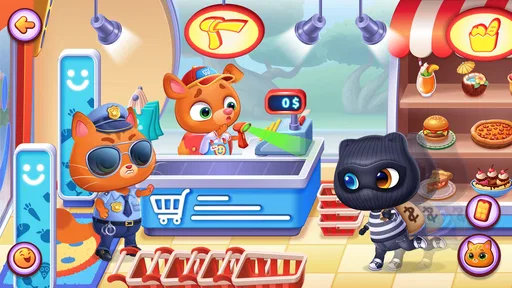
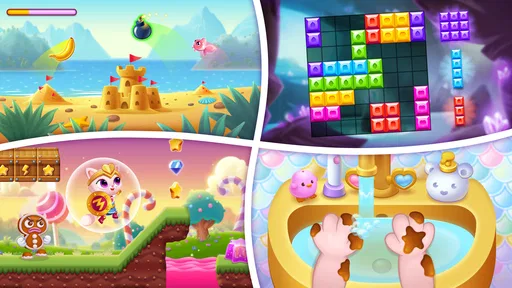
Our Review of Bubbu & Mimmi World
 Analysis by Appyee
I went into Bubbu & Mimmi World expecting a simple children’s casual game, and that is exactly where its appeal lies. It does not ask me to master complicated controls or understand a long story before I can play. Instead, it puts Bubbu and Mimmi at the center of a friendly world where exploring, caring and trying small activities form the main experience. The first few minutes are easy to understand, which makes the game approachable for young players and equally suitable for a short shared session with an adult.
Created by Bubadu, the game is free to download and aimed at Everyone. It has attracted over ten million installs, while its average rating sits at 3.8 from around twenty-three thousand ratings. Those figures suggest a broad audience, but they also tell me not to treat it as a perfect fit for every family. This is a light, repeatable game rather than a deep adventure, and its strengths become clearer when I look at the small loop that keeps bringing me back: do something, see a response, receive a reward or sense of progress, then start another brief activity.
How the play loop works in everyday use
I find the play loop easiest to enjoy when I treat each visit as a small activity rather than trying to explore everything at once. Giving a child one choice to make, then pausing to notice how Bubbu or Mimmi responds, can turn casual tapping into a more attentive shared moment. That everyday rhythm also makes it easier to decide when the session feels complete.
The first action is deliberately simple
The best way to understand the game is to watch what happens after the first touch. I can enter its world without learning a complicated rule set, then begin interacting with Bubbu, Mimmi or the surrounding activities. That immediate response matters for a younger player. There is no intimidating opening barrier, and the game communicates its basic idea through interaction rather than through a long explanation.
For me, the first action is less about winning and more about discovering what the world allows. I try an available activity, check how the characters react, and then decide whether to continue there or move elsewhere. This makes the game feel closer to a digital playroom than a traditional level-based game. A child can experiment without needing to understand strategy, while an adult can quickly see whether the controls are comfortable enough for independent play.
That simplicity is also the first important trade-off. Players looking for precise platforming, tactical decisions or a clear challenge ladder will probably find the opening too gentle. The game is built for accessibility, not mastery. I would recommend it to someone who wants a calm, character-focused experience, but not to a player who needs constant difficulty or a strong competitive target.
A useful way to introduce it to a child is to begin with one small goal instead of handing over the entire game at once. I might say, “Let’s see what Bubbu does here,” and allow the child to choose the next action. This turns the opening into a shared discovery exercise. It also prevents the experience from becoming a rapid sequence of random taps, because the player starts paying attention to cause and effect.
Feedback makes each interaction understandable
The game’s feedback rhythm is the part I notice most during repeated play. An action is followed by a visible response from the characters or the activity, so the player quickly learns that touching, choosing and exploring have consequences. That response may be the character’s reaction, a change in the immediate scene or a sense that the task has moved forward. The important point is that the game does not leave the player wondering whether anything happened.
This rhythm works especially well for short attention spans. A child can try something, receive an answer from the game, and immediately decide what to do next. There is less pressure to remember a complicated objective several minutes later. I also found that this makes the game suitable for occasional play rather than only for long sessions. It can be opened when there is a little time available, enjoyed briefly and put away without losing the basic thread.
Parents should still expect to guide the first session. Even a simple world can present several choices, and a young player may tap everything without noticing which action produced which response. I get better results when I slow the pace down and ask the child to predict what might happen before touching the next object. That small habit changes the game from passive animation watching into a basic exercise in observation and decision-making.
One of the less obvious strengths is that the feedback loop supports gentle learning without pretending to be a formal educational tool. The player practices matching an action with a result, following a short sequence and noticing character needs or reactions. I would not use it as a replacement for a dedicated learning app, but it can be a pleasant way to encourage attention and simple problem-solving during relaxed play.
Rewards give the next session a reason
The reward side of the loop is not about dramatic victories. The satisfaction comes from completing a small interaction, seeing the world respond and having another reason to explore. That softer reward structure suits the game’s casual identity. I do not need to prepare for a major challenge every time I open it; I can simply return to the characters and see what activity feels appealing.
This is where the game can work well as a transition between parts of the day. A child waiting for dinner, taking a quiet break or settling down after a busier activity may appreciate a game that does not demand intense concentration. In my experience, the appeal is strongest when the player treats each interaction as a tiny event rather than expecting a long narrative journey.
There is a practical advantage to this design: the player can make progress through attention rather than speed. An adult sitting beside a child can talk about what is happening, ask the child to choose between options and let the child lead. That makes the reward social as well as digital. The game becomes more engaging when someone reacts to the character’s situation with the player, even though it remains playable as a solo experience.
At the same time, the gentle reward system may feel thin to older children. If someone wants collectible depth, demanding missions or a strong sense of unlocking a larger campaign, this is not the right type of game. It is better understood as a collection of approachable moments around Bubbu and Mimmi. Its purpose is to make returning easy, not to create a long-term achievement project.
Resetting is part of the design, not a failure
After a short activity, the game naturally returns me to the wider world or to another choice. That reset is important because it keeps the experience from becoming exhausting. I can finish one interaction, pause, and later begin again without feeling that I have abandoned a complicated mission. For a casual game aimed at a broad age range, this low-pressure reset is a real advantage.
I also see the reset as a useful boundary for younger players. Instead of encouraging one endless session, an adult can define a simple stopping point: complete one activity, visit the characters once more, then close the game. Because the loop is made from small pieces, stopping does not feel like losing a carefully built run. That makes it easier to fit into a family routine than games that depend on reaching the next checkpoint before quitting.
Still, the same structure can become repetitive. The reason to begin another session comes from the comfort of familiar characters and the possibility of another small interaction, not from a constantly changing challenge. After several visits, I wanted more variation and a stronger sense that my actions were shaping a lasting adventure. Players who enjoy repeating cozy activities may find that relaxing; players who need novelty may move on quickly.
My practical advice is to use the reset intentionally. Rather than leaving the game open while a child taps through everything, I would choose a short theme for each visit: explore, care for a character, or try a different activity. This gives the session a beginning and an end, and it helps reveal whether the game is genuinely holding the player’s attention or merely filling time with repeated taps.
Who will enjoy it, and who should skip it?
Bubbu & Mimmi World is a good match for young children who prefer friendly characters and uncomplicated interaction. It also suits parents looking for something they can explore together without having to explain complex controls. The Everyone rating reflects its broad accessibility, although adults should still decide whether the presence of optional purchases fits their household rules.
The game is less suitable for players who want a conventional adventure with a clear plot, combat, racing, competitive scoring or demanding puzzles. It also may not satisfy a child who has already moved beyond simple character interaction and wants a game with deeper progression. In those cases, a more focused puzzle game or a larger story-driven title would provide a clearer challenge.
Compared with other casual games, this one stands out through its character-care and exploration framing rather than through a single high-pressure mechanic. A quick puzzle game usually asks me to improve a score, while a fast arcade game asks me to survive or react quickly. Here, the reward is the interaction itself and the chance to spend another small moment with Bubbu and Mimmi. That makes it calmer, but also less demanding.
The developer’s choice to keep the experience approachable is convincing, yet the rating of 3.8 shows that broad reach does not automatically mean universal satisfaction. My own view is that the game should be judged as a relaxed children’s play space, not as a full-scale adventure. Once I use that standard, its simplicity feels intentional rather than unfinished, although the repetition remains a genuine limitation.
Practical details before installing
The game is free, which makes it easy to test without committing money at the start. It includes optional in-app purchases ranging from less than a dollar to nearly sixty dollars per item, so I would check the device’s purchase controls before letting a child play independently. That is especially important because a child may understand the game’s playful choices without understanding the real-world cost attached to an optional purchase.
It runs on Android devices using version 7.0 or later, and the current version is 1.59. The game was released in December 2024, so anyone installing it on an older device should still confirm that the phone or tablet meets the operating-system requirement. These details make it reasonably accessible for many Android users, but compatibility is worth checking before planning a trip or a child’s offline activity around it.
I would also approach the free model with a clear household plan. If the goal is a calm, supervised experience, the basic download may be enough to decide whether the interaction suits the child. If the child becomes focused on obtaining every optional item, the game can shift from casual play into repeated requests. Setting expectations before the first session avoids turning a gentle character game into an argument about purchases.
My verdict on the complete loop
The action-feedback-reward-reset structure is coherent. I touch or choose something, the game responds clearly, a small success or discovery gives me a reason to continue, and the session can end without a harsh penalty. That loop explains why the game is easy to pick up and why it can work in short everyday situations. It is not trying to overwhelm me with systems; it is trying to make another brief visit feel comfortable.
The strongest use case is a child who enjoys caring for virtual characters and exploring at their own pace, especially with an adult nearby during the first sessions. The weakest use case is a player searching for lasting challenge, deep progression or a competitive goal. Knowing that distinction matters more than the install count or the attractive character concept.
My recommendation is cautious but positive: try it if you want a free, approachable casual game for relaxed play, and supervise purchases from the beginning. I would choose a more demanding alternative for older or challenge-focused players, but for the right audience, the gentle reset is the reason the game remains welcoming instead of tiring. Bubadu has made a simple world that is easiest to appreciate when each session is treated as a small shared activity, not as a game that must provide endless depth.
Verdict
Strengths of Bubbu & Mimmi World
- Colorful, child-friendly visuals are easy for younger players to understand.
- Simple touch controls make exploration accessible without reading skills.
- Many locations encourage open-ended play and creative role-playing.
- Short activities are suitable for quick play sessions.
- Offline access makes it convenient for travel or limited connectivity.
Limitations of Bubbu & Mimmi World
- Some interactions may feel repetitive after extended play.
- Certain content or items may require in-app purchases.
- Ads can interrupt play depending on the version and settings.
- The game offers limited challenge for older children.
- It may use considerable storage after additional content is downloaded.
Similar Picks in This Category
View All
My Talking Angela
Outfit7 Limited4.2

My Talking Tom
Outfit7 Limited4.3

Pou
Zakeh4.2

My Talking Tom 2: Pet Game
Outfit7 Limited4.3

Candy Crush Saga
King4.6

Bridge Race
Supersonic Studios LTD4.1
Frequently Asked Questions
What is Bubbu & Mimmi World?
Bubbu & Mimmi World is a casual virtual-pet game centered on caring for adorable animal characters and exploring a colorful, child-friendly world. Players can feed, bathe, dress, and entertain the pets while completing simple activities and mini-games. The experience is designed to be easy to understand, with relaxed gameplay suitable for younger players and anyone who enjoys cute simulation games.
What can you do in Bubbu & Mimmi World?
The game offers several everyday pet-care activities, including preparing food, keeping the characters clean, choosing outfits, decorating spaces, and playing interactive mini-games. Exploring the different areas gives the experience more variety than a basic pet simulator. Progress generally comes from taking care of the characters and participating in activities, so there is no complicated storyline or difficult control system to learn.
Is Bubbu & Mimmi World suitable for children?
Bubbu & Mimmi World has a colorful presentation, simple controls, and gentle gameplay that make it approachable for children. However, parents should still review the app’s age rating, advertising settings, and any available in-app purchase options before allowing independent play. As with most free mobile games, supervision is recommended, particularly if the device is connected to a payment method or the internet.
Is Bubbu & Mimmi World free to download and play?
The game can generally be downloaded without an upfront purchase, allowing players to try its main activities at no initial cost. Depending on the version and platform, it may include advertisements, optional purchases, or unlockable content. Players who want a quieter experience or access to additional items should check the store listing carefully, since pricing and available features can change with updates.
Does Bubbu & Mimmi World require an internet connection?
Many of the basic pet-care activities and mini-games may be available without a constant internet connection, which is useful for playing while traveling or when mobile data is limited. Nevertheless, an internet connection can be required for advertisements, updates, purchases, account-related features, or certain online content. Availability may also differ between Android and iOS, so checking the current store description is advisable.
Play our best games!


